
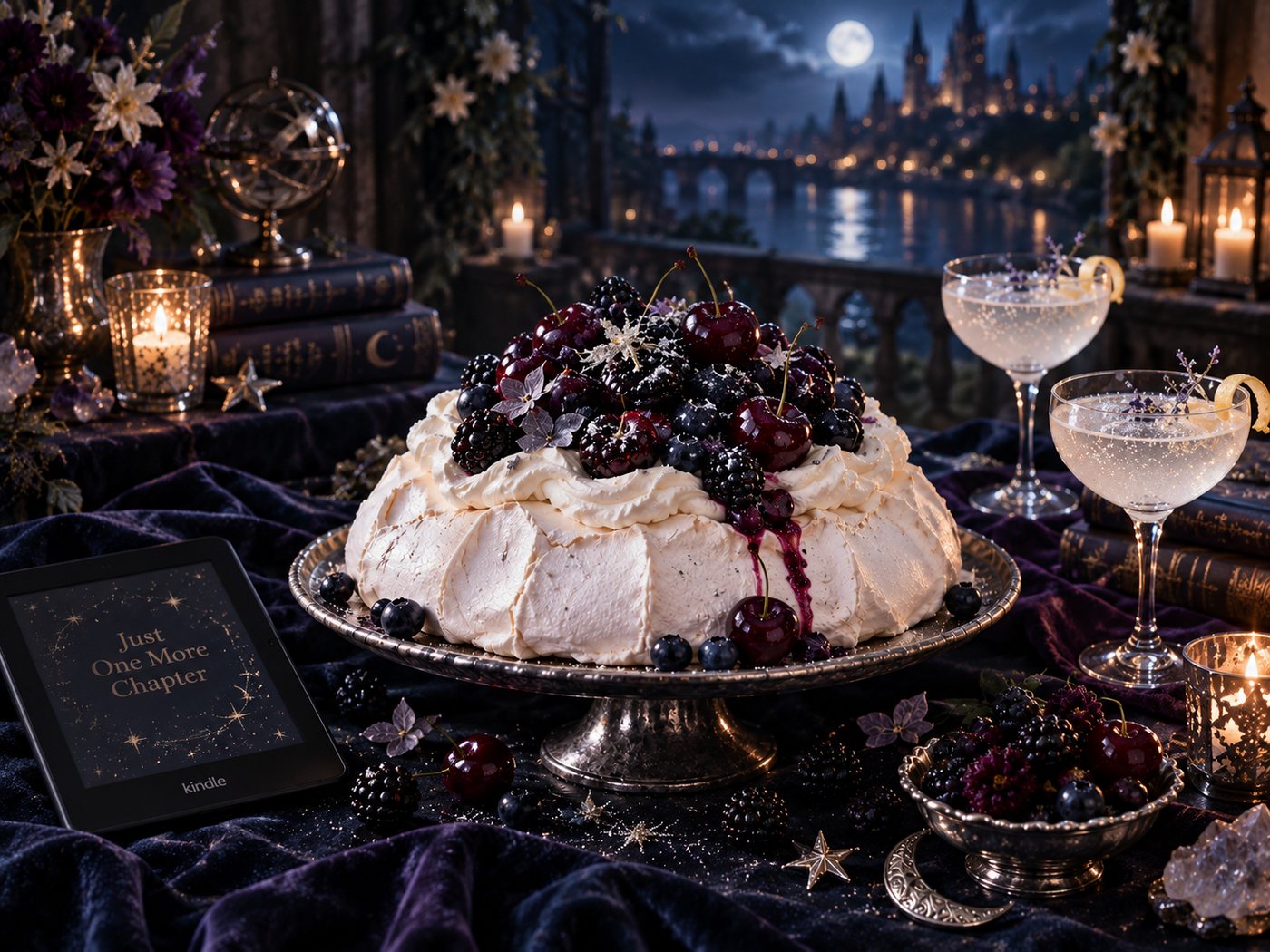
White as a cloud, covered in dark berries, dusted like a night sky.
I am re-reading ACOTAR on GraphicAudio and I am halfway through A Court of Mist and Fury, which is the point where the whole series opens out and the Night Court takes over. Full cast, score, sound effects. It is less like listening to a book and more like having one performed at you while you do the washing up.
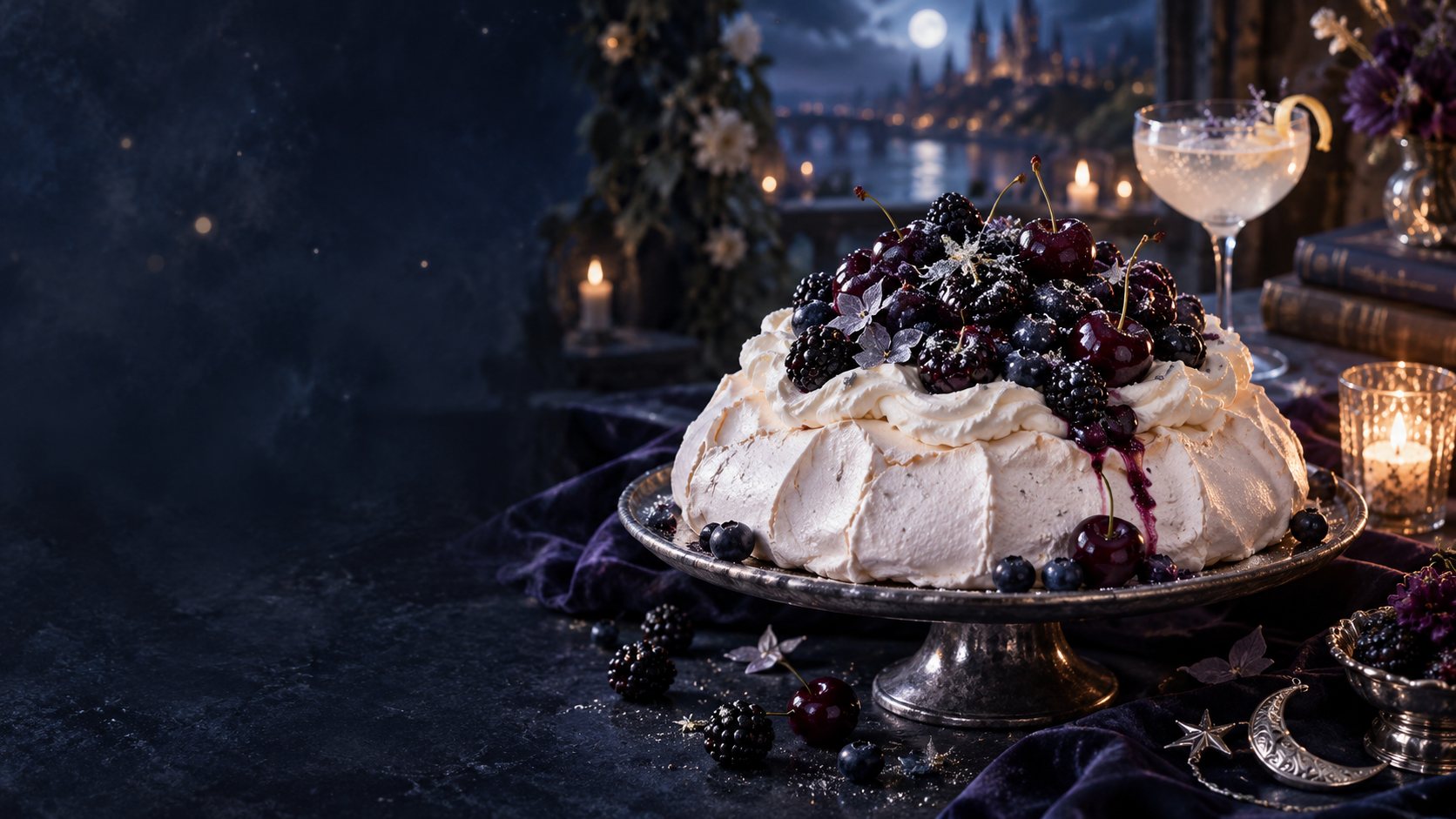
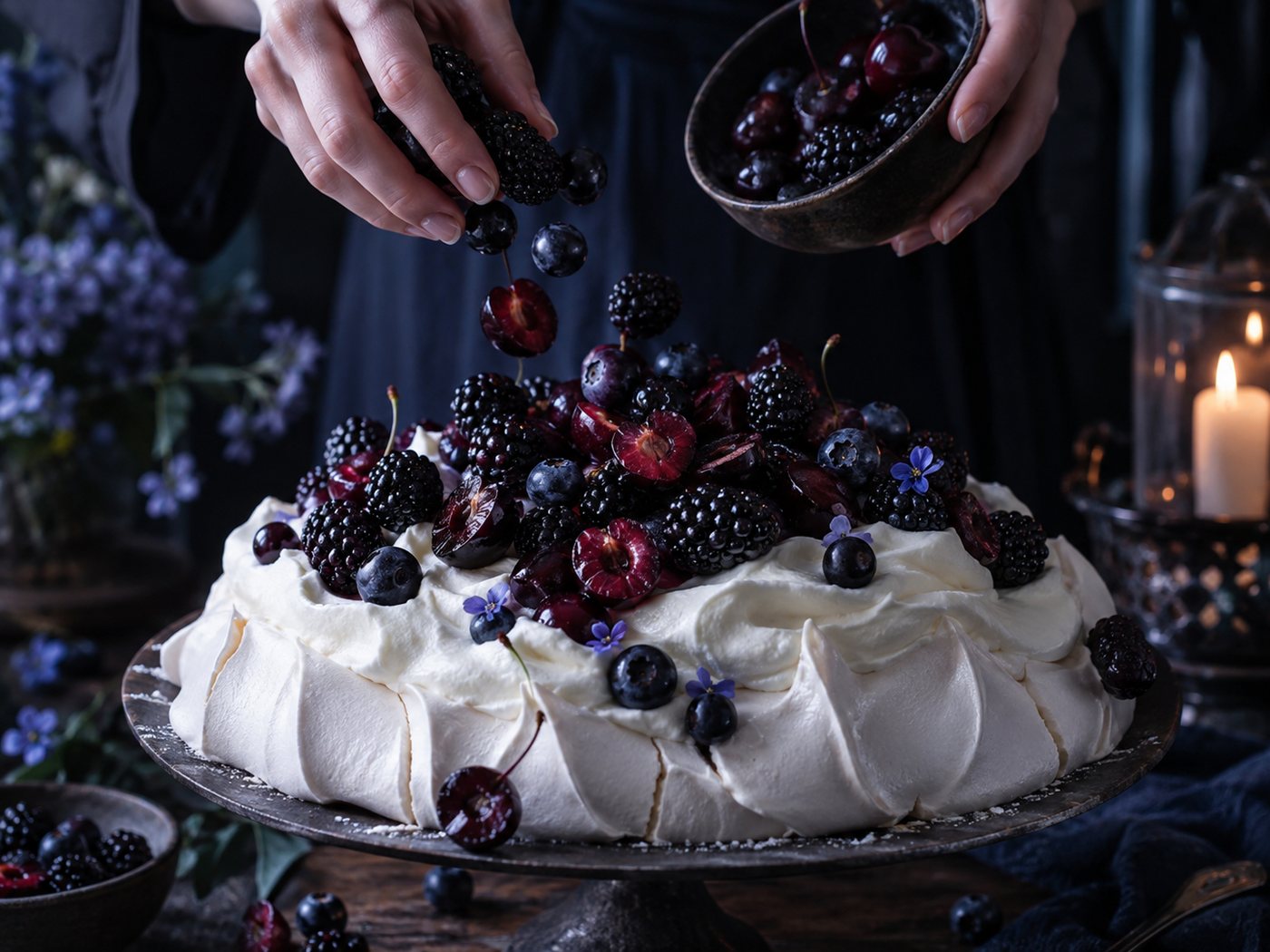
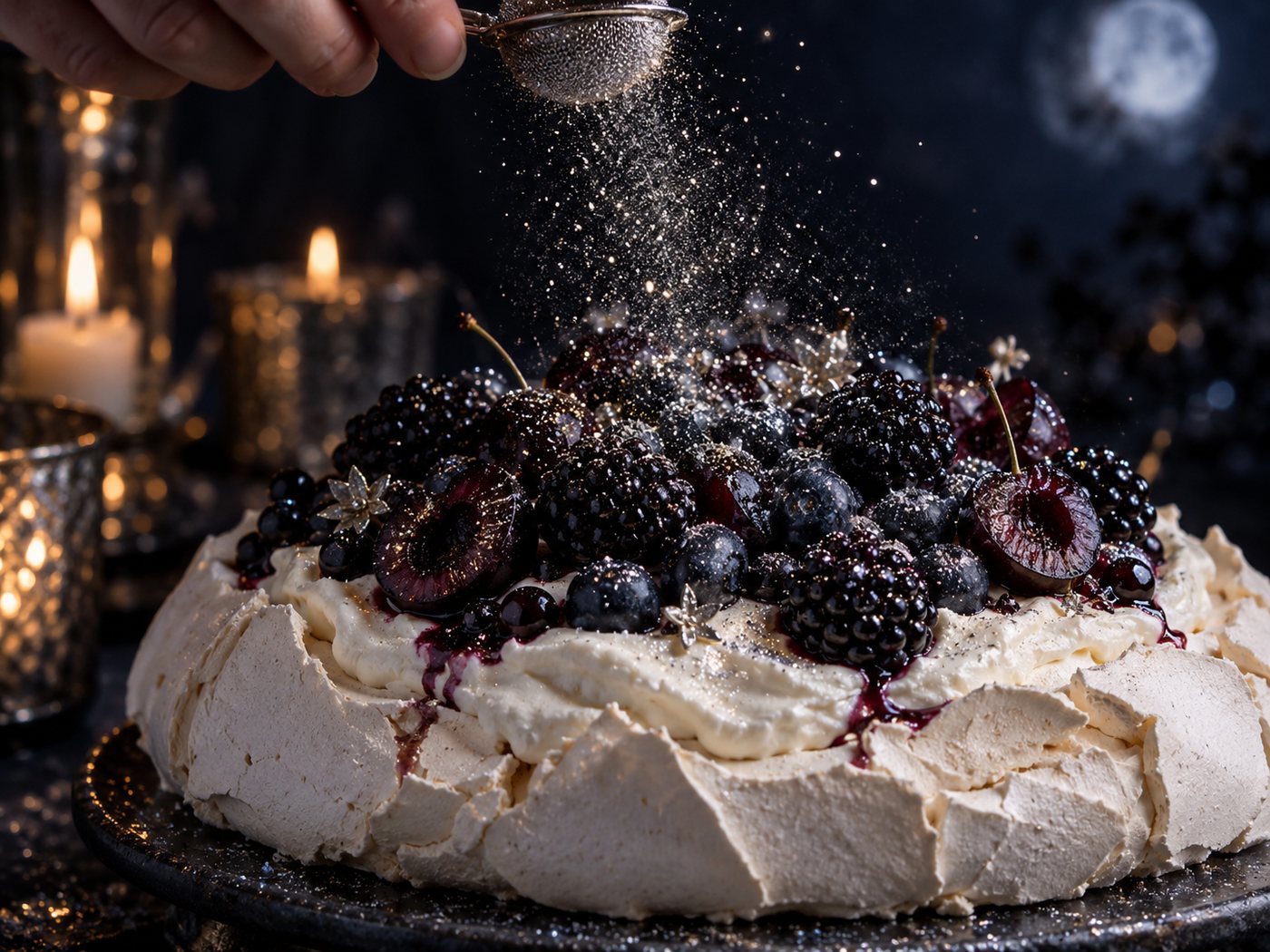
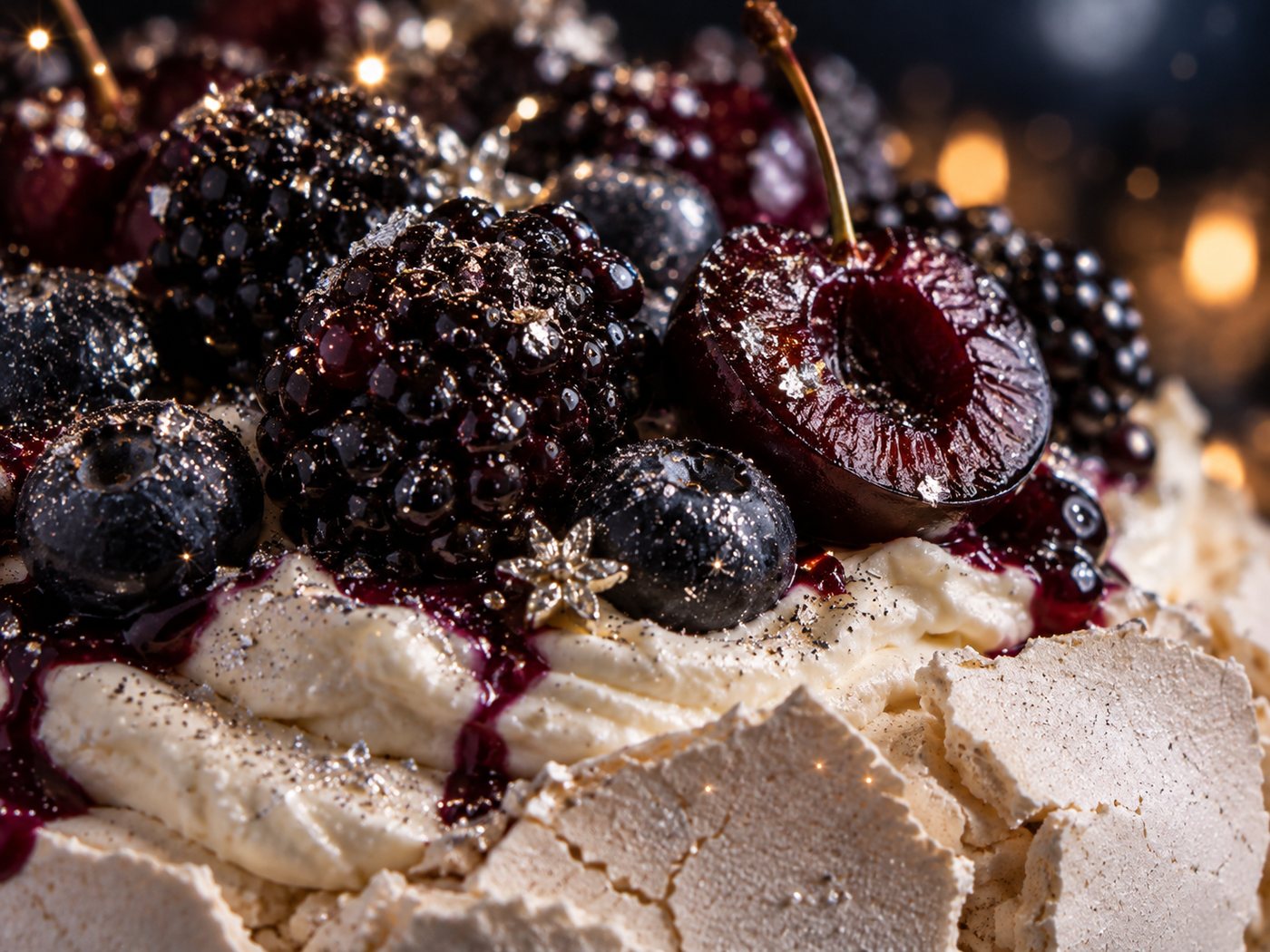
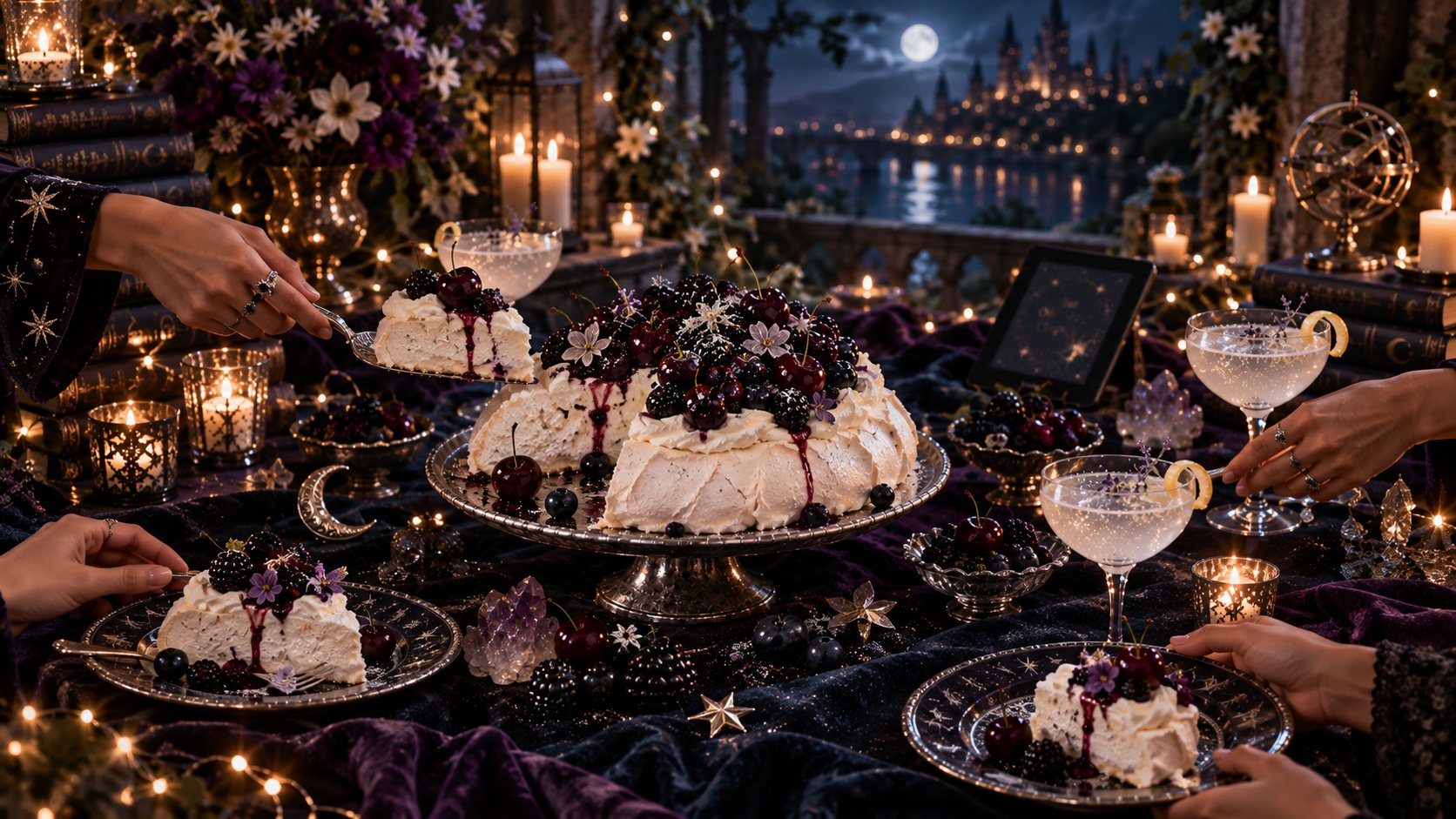
So the snack is a pavlova gone dark. Crisp white shell, soft marshmallow centre, a thick layer of cream and then as many dark berries as it will hold, with a whisper of edible silver over the top so the whole thing reads as a night sky rather than a Christmas dessert. Blackberries, blueberries and dark cherries do the heavy lifting, and the berries are just coming good here, which is the other reason this is the right week for it.
This one pairs perfectly with a City of Starlight Gin Fizz for a full romantasy reading night, which is a lot of shimmer for one table and I stand by it.
A gentle note: ACOTAR starts fairly tame and gets considerably spicier from book two on, with real violence alongside it. New to the series? My romantasy starter guide covers where to begin.
What you will need
Serves 8 as a book club dessert. Start it a few hours ahead, because the cooling is not optional.
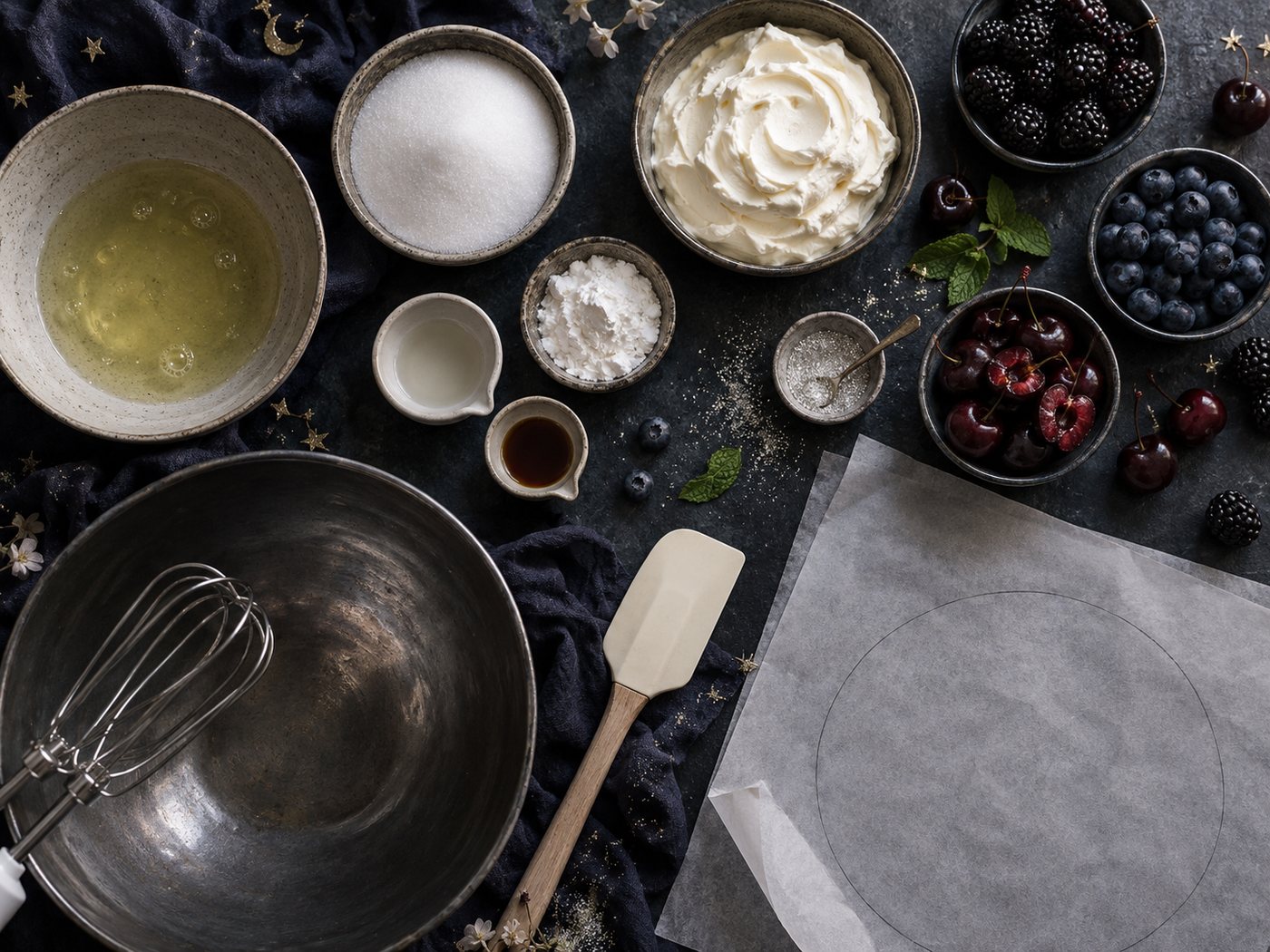
The pavlova base
- 4 egg whites, at room temperature
- 220g (1 cup) caster sugar
- 2 teaspoons cornflour
- 1 teaspoon white vinegar
- 1 teaspoon vanilla extract
- A pinch of salt
The night sky
- 300ml thickened cream
- 1 tablespoon icing sugar
- 125g blackberries
- 125g blueberries
- A handful of dark cherries, halved and pitted
- A small pinch of edible silver lustre dust or edible glitter
- A few small mint leaves, optional
Method
Step 1: Set up properly before you start
Heat the oven to 150°C, or 130°C fan-forced. Trace a 20cm circle onto baking paper, then flip the paper over so the pencil is underneath. Wipe your mixing bowl and beaters with a little vinegar on paper towel and dry them. Any trace of grease or egg yolk will stop the whites whipping, and there is no recovering from it halfway through.
Step 2: Whip to soft peaks
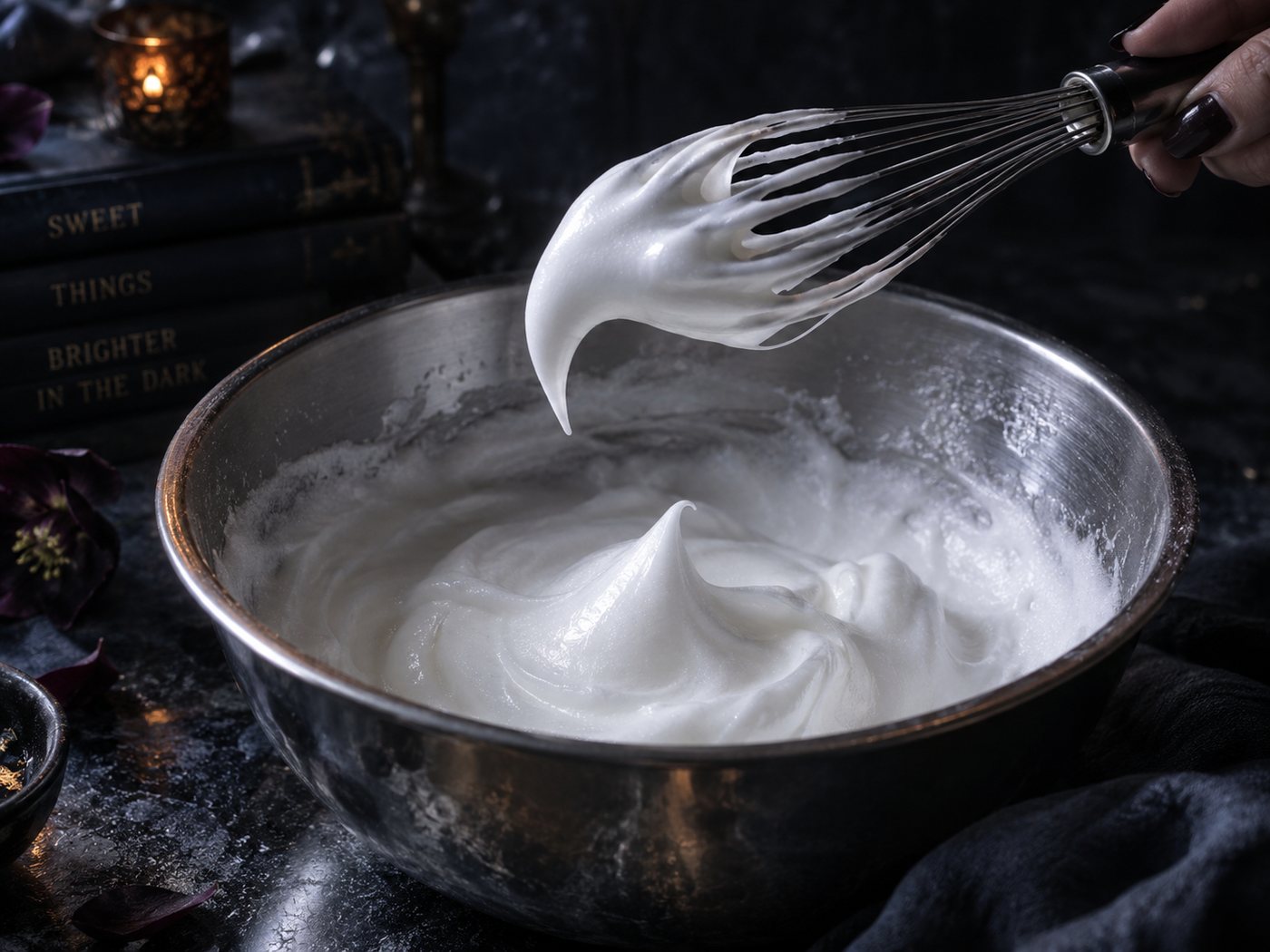
Beat the egg whites with the pinch of salt on medium until they hold soft peaks, the stage where the peak flops over when you lift the beater. Do not rush to stiff peaks yet, because the sugar still has to go in.
Step 3: Add the sugar one spoonful at a time
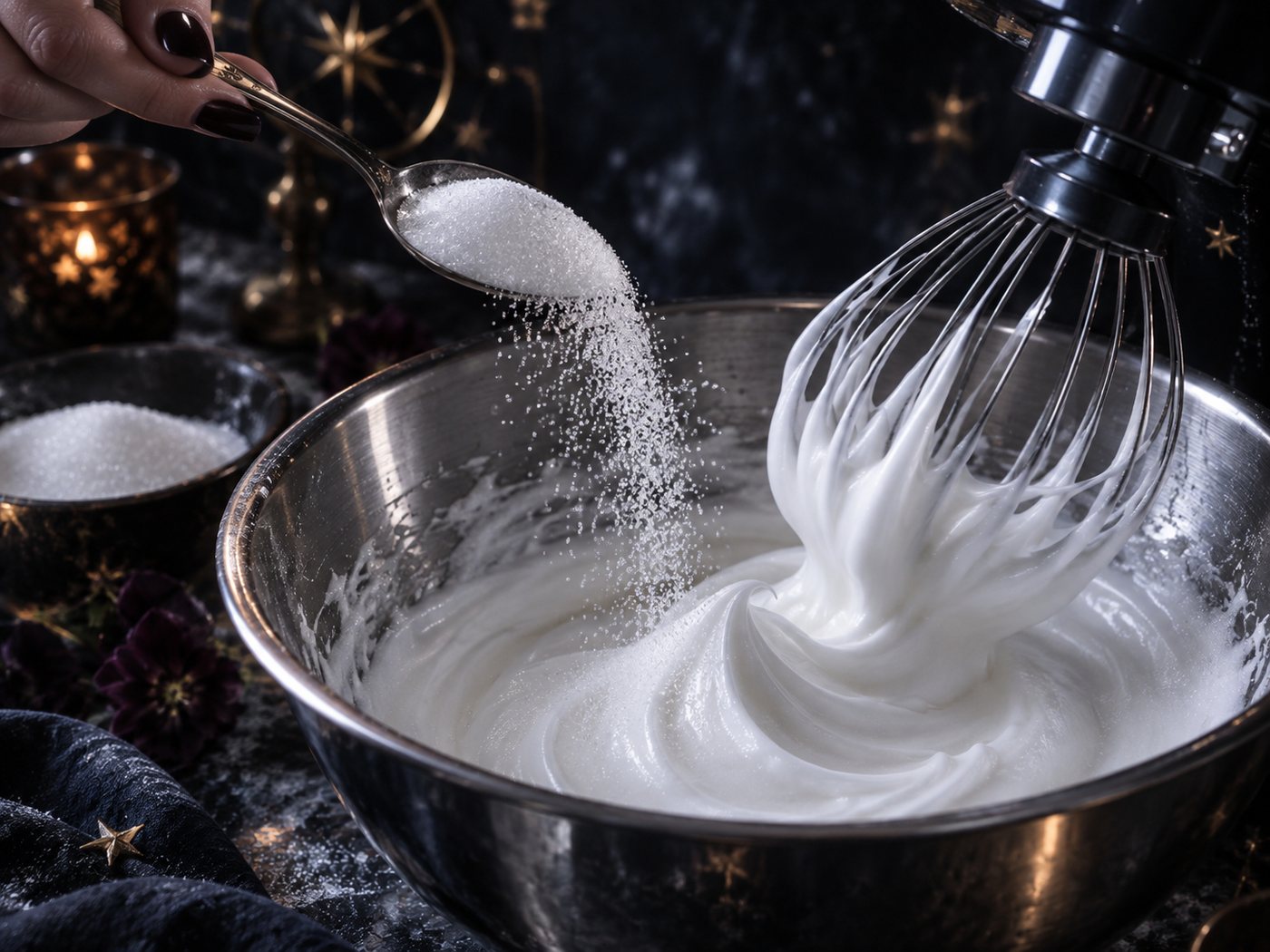
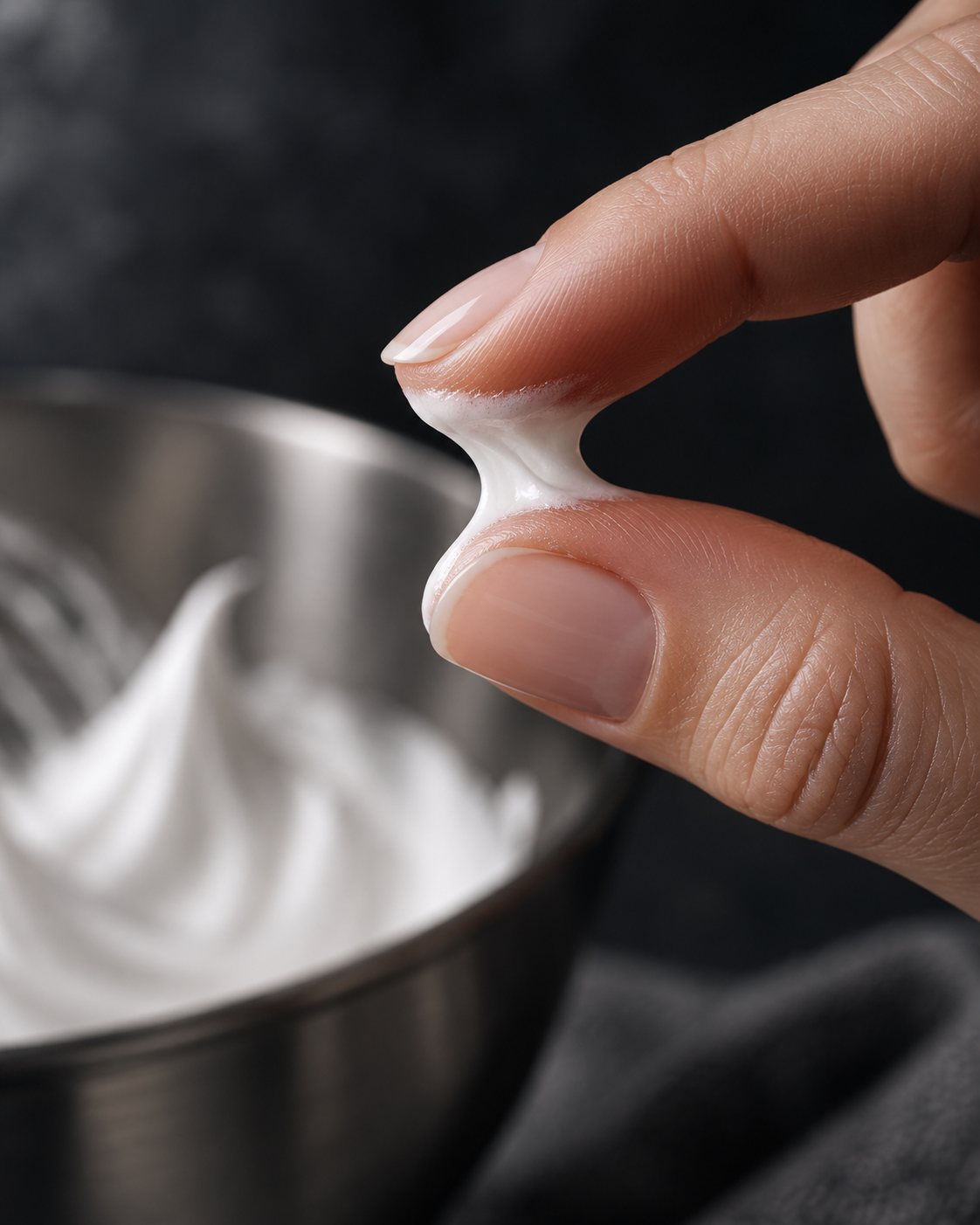
This is the step that decides whether your pavlova works. Add the caster sugar a tablespoon at a time with the mixer running, waiting about 20 seconds between each. It should take a good 8 to 10 minutes. When it is ready the mixture is thick, glossy and holds a stiff peak, and if you rub a little between your fingers you should feel no grit at all. If it still feels sandy, keep beating. Undissolved sugar is what makes a pavlova weep sticky beads in the oven.
Step 4: Fold in the rest
Sift the cornflour over the top, add the vinegar and vanilla, and fold through gently with a spatula until just combined. The cornflour and acid together are what give you the marshmallow middle rather than a meringue that is crisp the whole way through.
Step 5: Shape it
Pile the mixture inside your traced circle and shape it into a round with a slight dip in the middle and tall sides. Do not smooth it flat. The peaks and ridges are what catch the light later, and the dip gives the cream somewhere to sit.
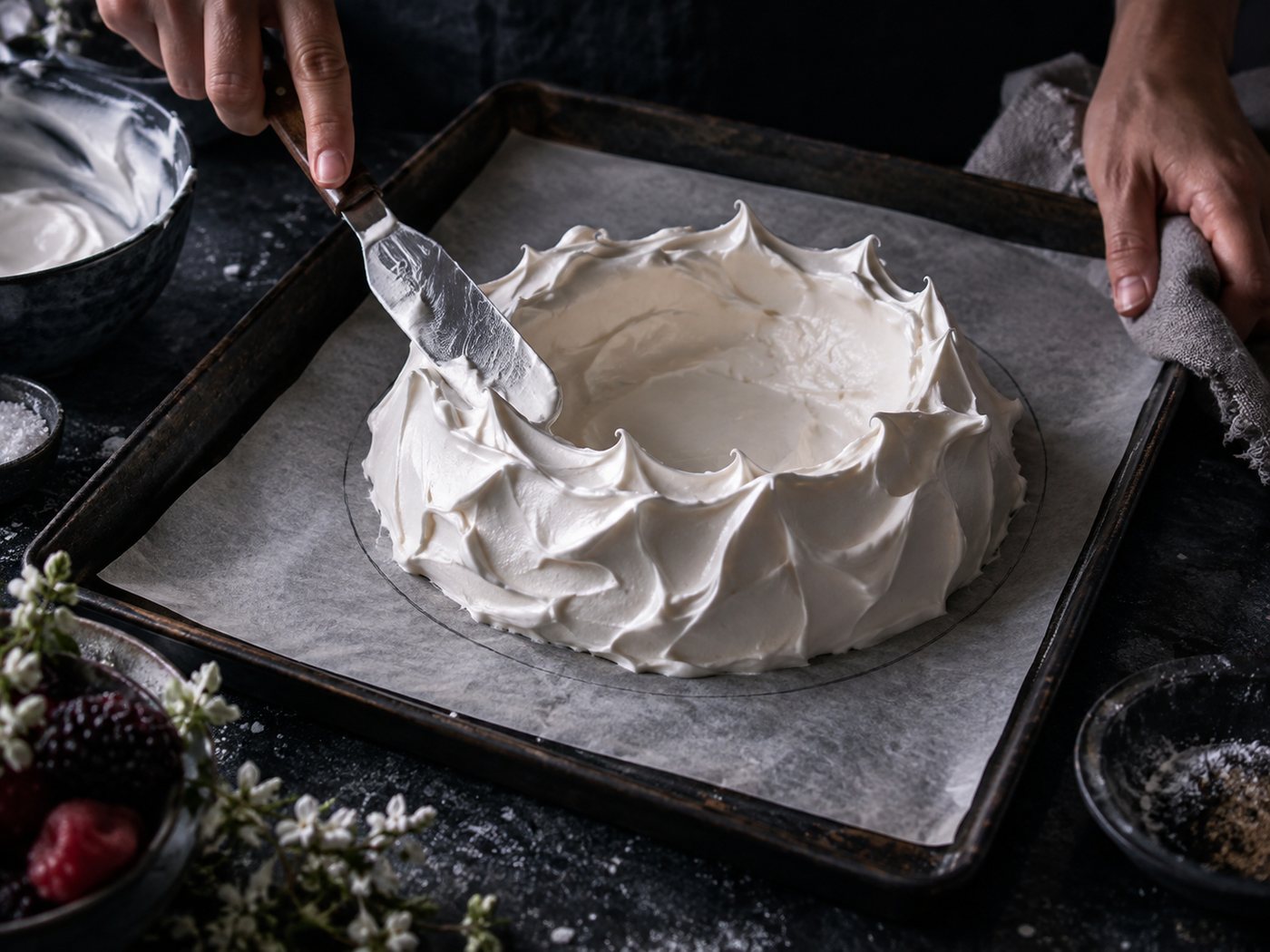
Step 6: Bake low, then leave it alone
Put it in the oven and immediately drop the temperature to 120°C, or 100°C fan-forced. Bake for 1 hour and 15 minutes without opening the door. Then turn the oven off completely and leave the pavlova inside, door shut, until it is completely cold. Several hours, or overnight. Pulling it out into a cool kitchen is the single most common reason pavlovas crack and collapse.
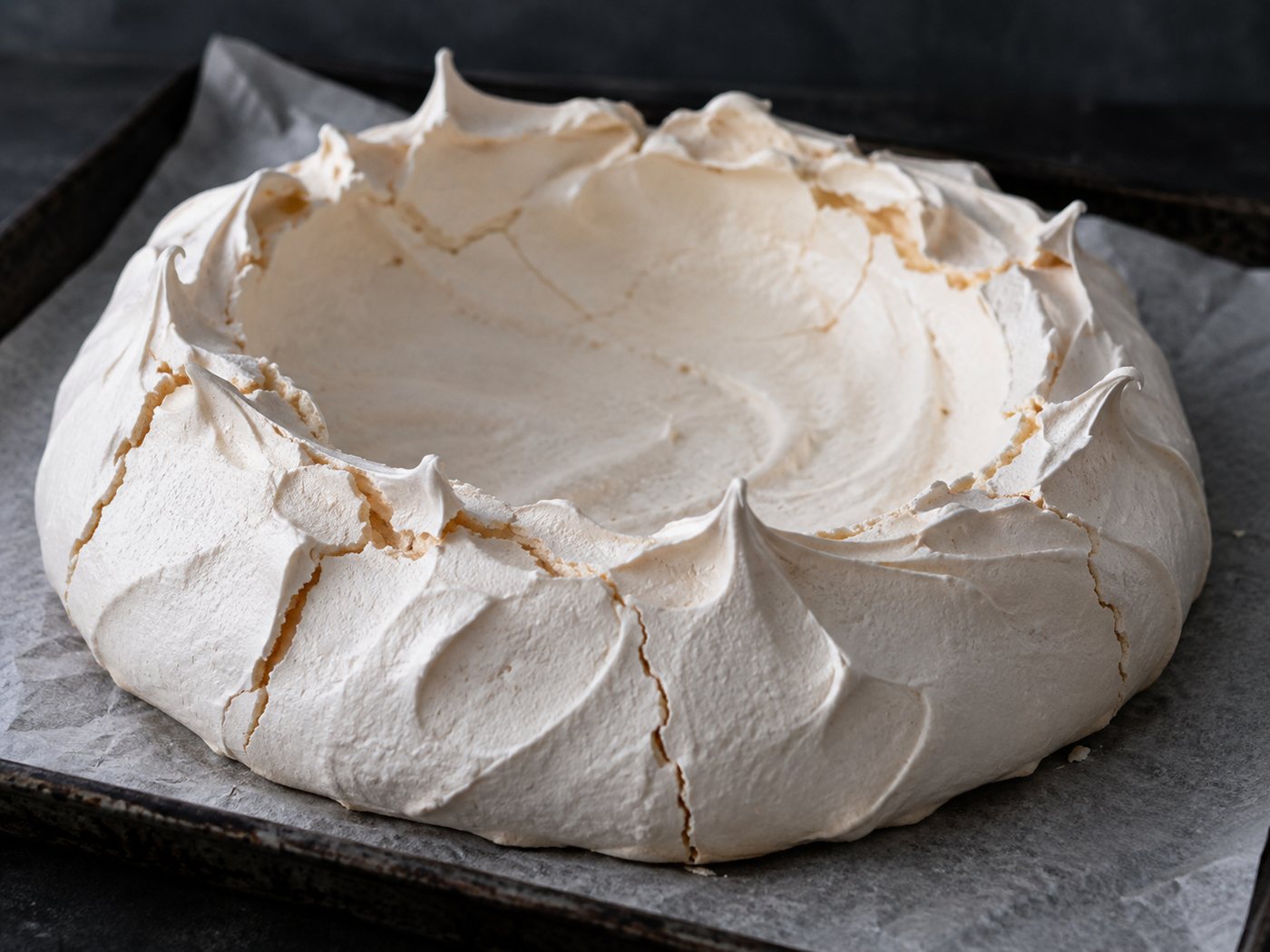
Step 7: Build the sky at the last minute
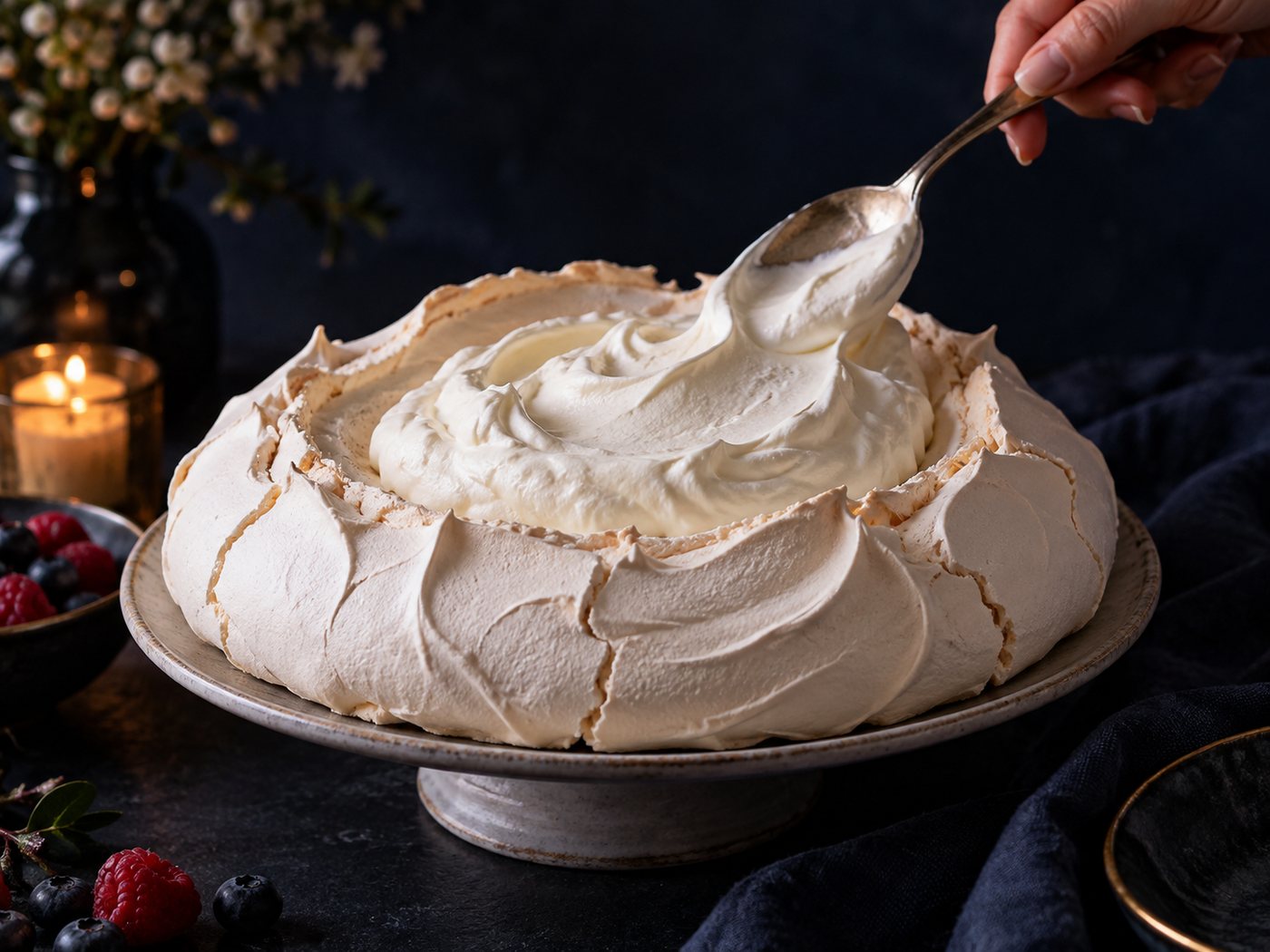
Whip the cream with the icing sugar to soft peaks and spread it over the top, staying just inside the edge. Pile on the blackberries, blueberries and cherries, letting a few tumble down the side. Then take the smallest pinch of edible silver and dust it over from a height so it settles unevenly, the way stars actually sit. Serve immediately.
Cosy Kitchen Notes
The rub test is the whole recipe. If you take one thing from this, take that. Rub a bit of the mixture between your finger and thumb. Smooth means the sugar has dissolved and you are fine. Gritty means it has not, and you will get sugary syrup beading on the surface as it bakes. Just keep beating.
Cool it in the oven, door closed. Pavlova cracks because of a sudden temperature drop, not because you did anything wrong while mixing. Turn the oven off and walk away. Making it the night before is genuinely the easiest version of this recipe.
Cracks are not a failure. Even good pavlovas crack a little, and a collapsed middle is where the cream goes. This one is covered in dark berries and silver dust, so nobody is inspecting the structural integrity.
Humidity is the enemy. A damp day makes meringue sticky and soft no matter how carefully you work. If it is muggy, run the air conditioning while it cools, or pick a different day.
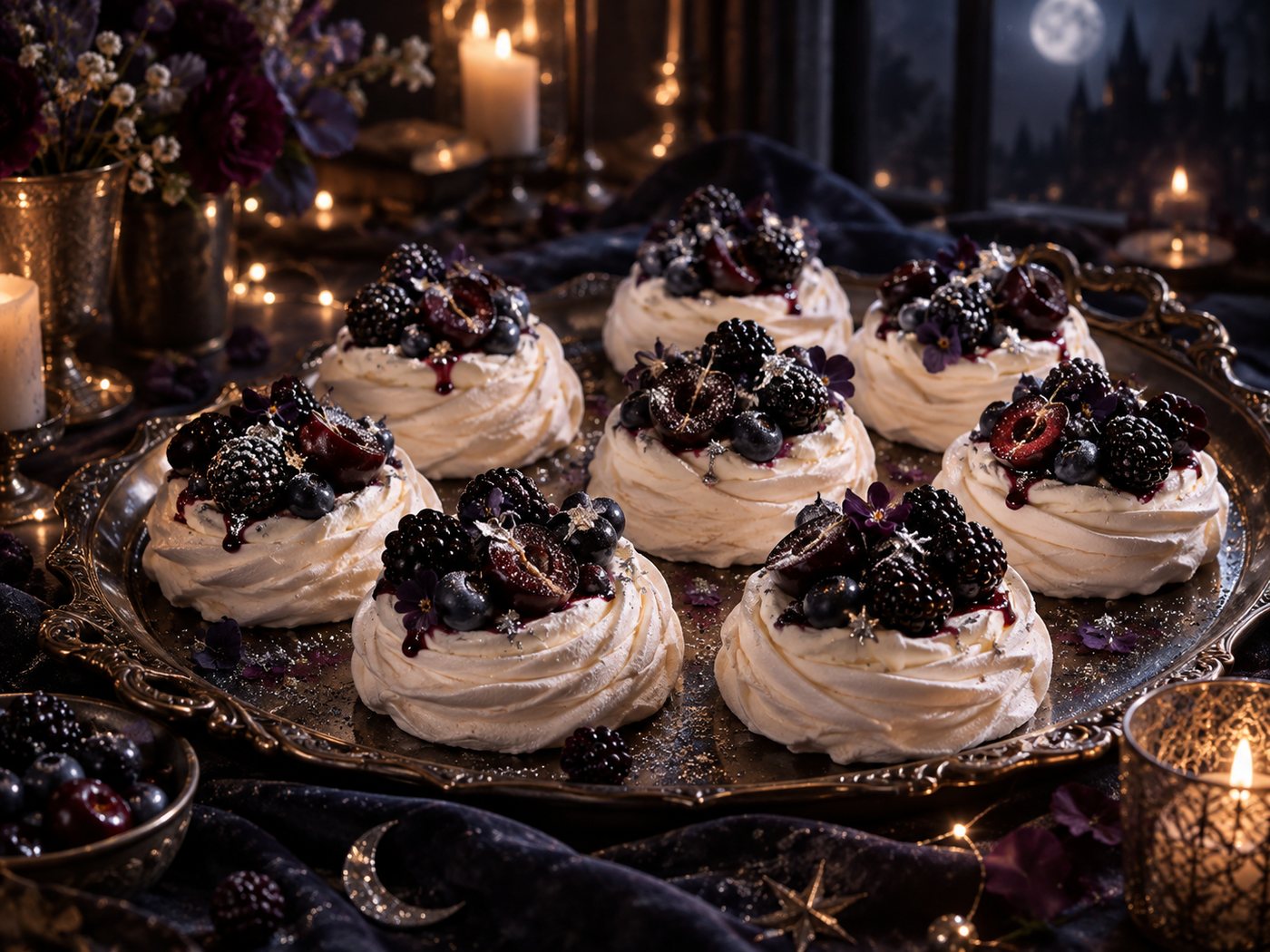
Make it for book club. Pipe the mixture into 8 individual nests instead of one big round and bake for about 45 minutes at the same low temperature. Mini pavlovas cool faster, travel better, crack less and remove the entire problem of cutting a pavlova neatly in front of an audience.
Save the yolks. Four egg yolks is most of a batch of custard, aioli or lemon curd. They keep covered in the fridge for a couple of days.
Quick answers
What is a pavlova?
A pavlova is a meringue-based dessert with a crisp outer shell and a soft marshmallow centre, topped with whipped cream and fruit. The cornflour and vinegar are what create that soft middle and separate it from a plain meringue. It is named after the Russian ballerina Anna Pavlova, and Australia and New Zealand have been arguing about who invented it for roughly a century.
What toppings go on a pavlova?
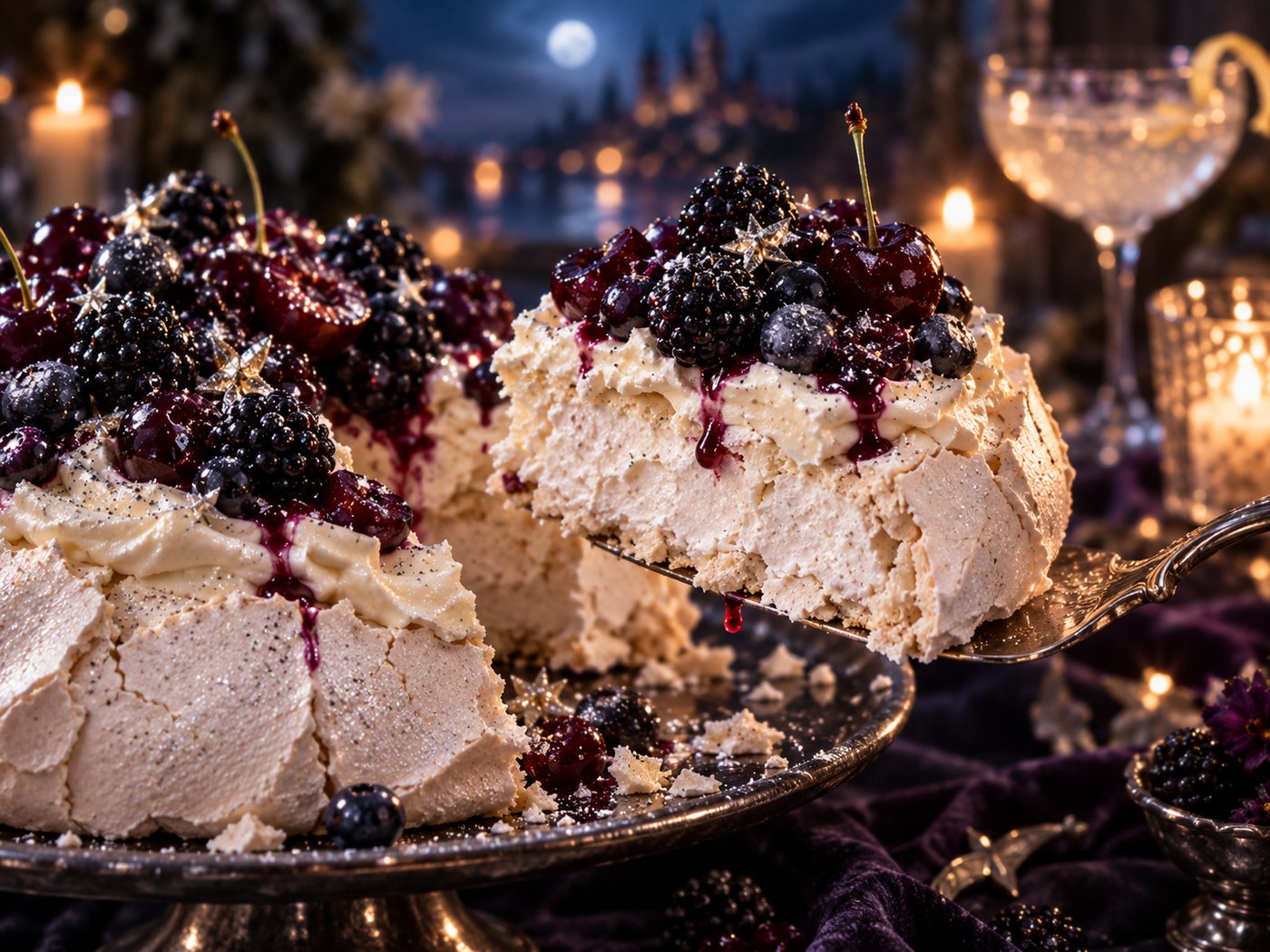
Whipped cream first, always, then fruit with some acidity to cut the sweetness. The classic is passionfruit, strawberries and kiwi. This version goes dark instead: blackberries, blueberries and cherries, which look like a night sky and taste sharper against the meringue. Lemon curd swirled through the cream, toasted nuts, or a drizzle of dark chocolate all work. Add every topping at the last minute, because cream sitting on meringue will soften the shell within the hour.
Why did my pavlova crack or weep?
Cracking is almost always a sudden temperature change, so cool it in the switched-off oven with the door closed. Weeping, meaning sticky golden beads on the surface, means the sugar had not fully dissolved before baking, so add it more slowly next time and use the rub test. Neither ruins the dessert, and the cream and berries hide both.
Can you make pavlova ahead of time?
The base yes, the finished pavlova no. Bake the shell up to two days ahead and keep it in an airtight container at room temperature, never the fridge, where it will go soft. Add the cream and fruit right before serving. An assembled pavlova is at its best within about half an hour.
The Last Bite
The Starlight Pavlova is crisp, soft, cold and covered in dark fruit, and it is the only dessert I know that genuinely improves by being made the day before. Very little active work, one long unattended cool, and a finish that looks like considerably more effort than it was.
Serve it beside a City of Starlight Gin Fizz for the full reading night spread. Full pairing lives on the Saturday Night Sip, Snack & Smut page.
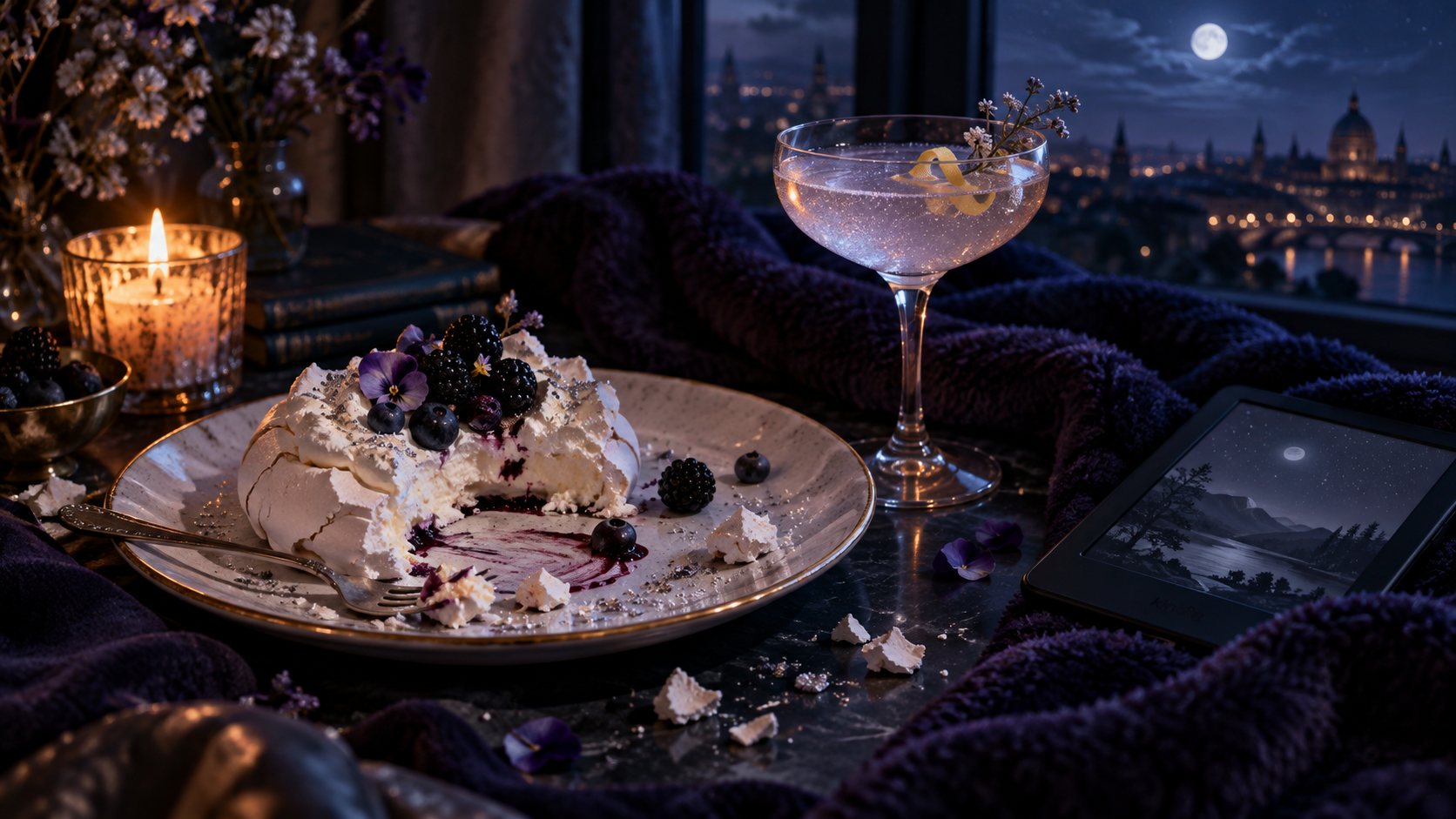
Dark berries, silver dust, and a court that only comes alive after sundown.